Recycling and Sustainability for Landscaping Newham
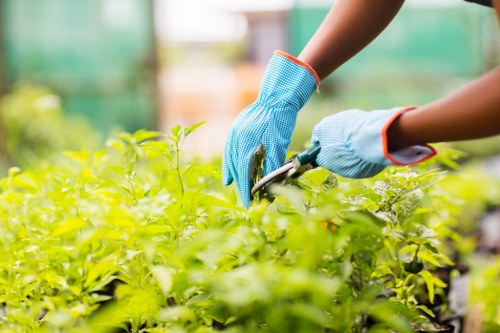 At Landscaping Newham, sustainability is woven into every stage of our work, from site preparation to the final tidy-up. Our approach to landscape recycling is designed to reduce waste, protect local resources, and support greener outdoor spaces across the borough. We aim to recycle at least 90% of green waste and reusable site materials wherever practical, helping keep valuable materials in circulation rather than sending them to landfill. This includes careful sorting of soil, branches, timber offcuts, stone, and metal so that each stream can be handled responsibly.
Newham’s urban setting means every project needs a smart, low-impact waste strategy. In many parts of the borough, waste separation is already part of everyday practice, and we reflect that local mindset by separating materials at source. Our landscaping recycling process supports mixed waste reduction by keeping organic matter away from general waste wherever possible. We also prioritise reuse before recycling, because extending the life of materials is often the most sustainable outcome.
As part of our commitment to greener operations, we work with local transfer stations to ensure waste is delivered to the most suitable facility for sorting and recovery. These stations help divert garden waste, hard landscaping rubble, and non-reusable materials into the correct recycling streams. Local transfer stations are especially important in a busy borough like Newham, where efficient handling reduces unnecessary transport and keeps project workflows moving smoothly.
 Our recycling and sustainability plan also includes partnerships with charities and community organisations. When materials still have life left in them, we look for opportunities to pass on usable items such as paving slabs, timber, planters, edging, and surplus fixtures. Through these charity partnerships, Newham landscaping recycling can support local reuse initiatives, helping schools, community gardens, and not-for-profit groups benefit from items that would otherwise be discarded.
Reusing materials is not only environmentally responsible; it also supports a circular economy that fits well with the needs of a densely built borough. Some projects generate perfectly serviceable materials that can be donated for repair work, growing spaces, or habitat projects. This kind of reuse reduces demand for new products and lowers the carbon footprint associated with extraction, manufacturing, and transport.
 We also take a practical approach to sorting and recovery on site. Green waste is separated from inert waste, while soil is assessed for possible reuse in suitable landscaping applications. Branches and cuttings may be turned into mulch or sent for composting, depending on the material and local processing options. This type of recycling activity is particularly relevant in an area like Newham, where space is valuable and responsible waste separation helps keep projects efficient and tidy.
To further lower emissions, our fleet includes low-carbon vans designed to reduce fuel use and improve efficiency on local journeys. These vehicles are an important part of our sustainability strategy, especially for short-distance travel between depots, transfer stations, and project sites. By using lower-emission transport, we reduce the overall environmental impact of landscape maintenance and installation work while supporting cleaner air in the communities we serve.
Our vehicles are scheduled carefully to minimise unnecessary trips and reduce congestion-related emissions. Where possible, materials are consolidated so that fewer journeys are needed, and loads are planned to make the best use of available capacity. This logistical approach supports our broader recycling in landscaping goals by ensuring waste collection, reuse deliveries, and material movement all happen as efficiently as possible.
In practice, sustainability means making thoughtful decisions at every step. That includes selecting products with recycled content where suitable, encouraging durable finishes that last longer, and avoiding wasteful over-ordering. Even small improvements matter, because landscaping work often involves repeated site visits, varied material types, and different waste streams. Our systems are designed to reduce waste before it starts, not just manage it after the fact.
 Another important part of our work is identifying recyclable materials early in the process. Concrete, bricks, topsoil, untreated wood, plant matter, and metal components can often be handled separately rather than mixed with general waste. This creates better outcomes at transfer stations and makes it easier to recover useful materials. It also aligns with the borough’s wider approach to separating waste carefully so that recyclable items do not become contaminated.
Where suitable, surplus organic material may be repurposed for mulching or composting, helping improve soil health and retain moisture in planting areas. This supports healthier landscapes while reducing dependence on virgin materials. By treating waste as a resource, Landscaping Newham sustainability becomes a practical method of improving both the environment and the quality of the finished outdoor space.
We also recognise that recycling is not only about disposal; it is about design choices too. Planning for reuse, specifying durable materials, and choosing low-impact transport all contribute to a more responsible landscaping model. When projects are managed with these principles in mind, the result is a cleaner process and a smaller environmental footprint across the borough.
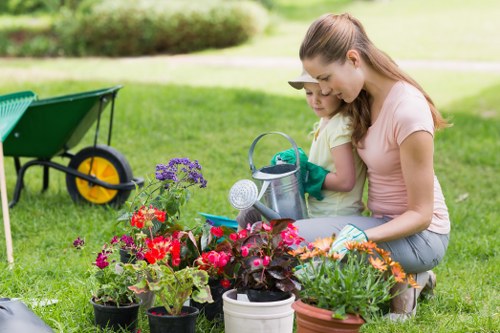 Looking ahead, our commitment to recycling percentage targets and low-carbon operations remains central to how we work. We continue to review our recycling performance so we can keep improving the proportion of waste diverted from landfill and increase the amount of material that is reused or recovered. The aim is simple: deliver high-quality landscaping while respecting the local environment and resources.
For us, sustainability is a day-to-day practice rather than a one-time promise. Through careful waste separation, local transfer station use, charity partnerships, and low-carbon vans, landscaping recycling in Newham becomes a joined-up system that supports cleaner sites and better environmental outcomes. It reflects the realities of working in a busy borough while still keeping long-term ecological goals in focus.